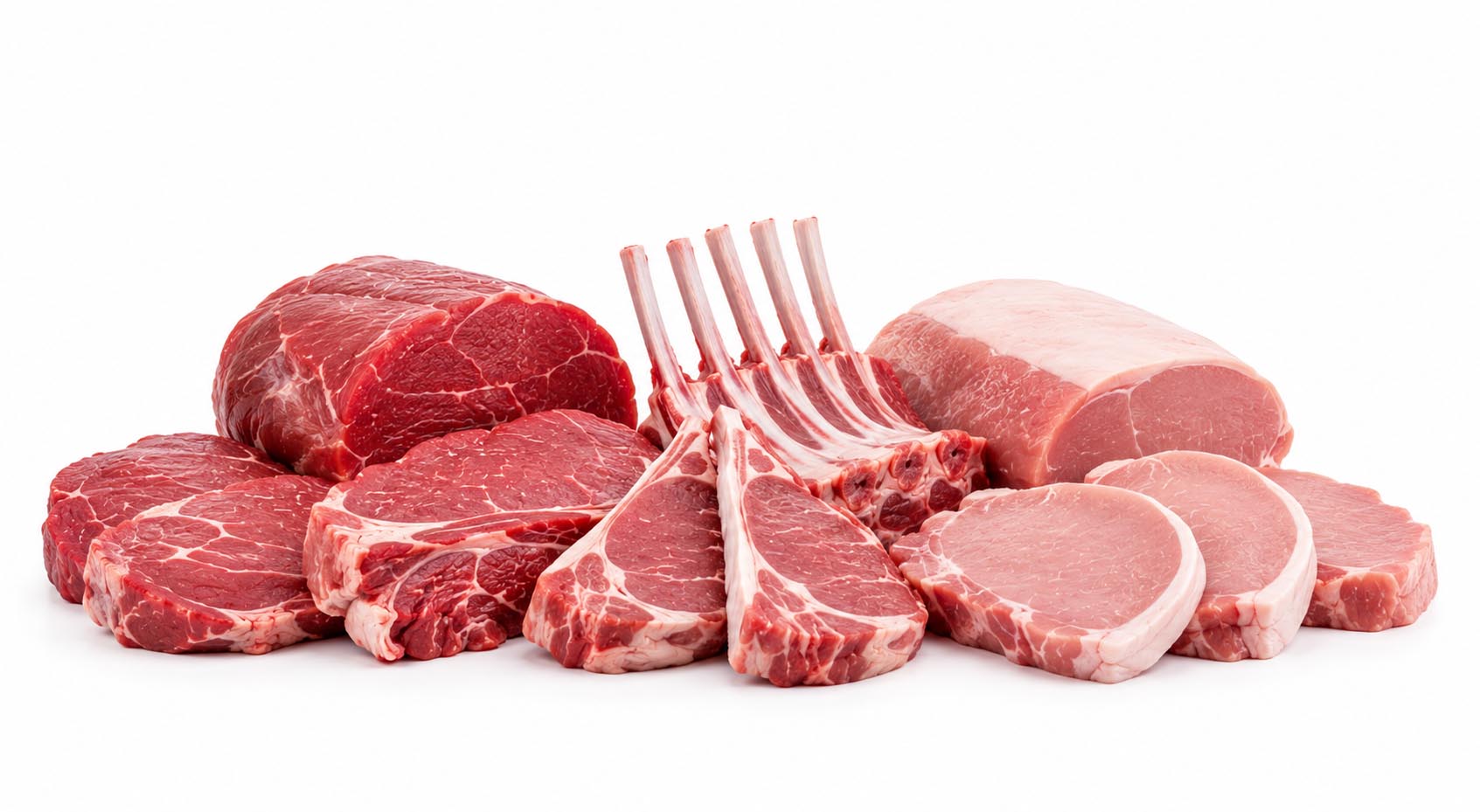
Meat from mammals provides some of the most concentrated dietary sources of complete protein, vitamin B12, heme iron and zinc. The animal proteins in beef, pork, lamb and game are absorbed more readily than the equivalent plant proteins, which is why even modest portions support muscle maintenance and recovery. Each species and each cut behaves differently in the kitchen, and varies enough in fat content that the calorie figures range from around 100 kcal per 100 g for lean venison to over 300 kcal per 100 g for fatty rib cuts.
British shoppers will recognise the dominant cuts on the UK shelf: braising steak, sirloin, fillet, brisket and mince in beef; loin, belly, leg and shoulder in pork; rump, leg, shoulder and shank in lamb. Game such as venison, rabbit and wild boar appears more seasonally and tends to sit at the leaner end of the spectrum, with iron content often higher than equivalent farmed cuts. Cured and processed meats including bacon, ham, salami and pepperoni occupy a separate sub-group, with much higher salt and (depending on preservation method) elevated nitrate or nitrite content.
Recent UK NHS guidance suggests adults consuming more than 90 g of red and processed meat a day reduce intake to around 70 g daily on average. The recommendation reflects evidence linking high intake of red and processed meats to colorectal cancer risk, alongside cardiovascular concerns tied to saturated-fat content in fattier cuts. Practically this means weighing portions a little more carefully, choosing leaner cuts where flavour allows, and treating cured products as occasional rather than everyday.
Storage matters as well. Fresh red meat keeps in a domestic fridge for two or three days at most; mince and offal closer to one. Freezing extends that to several months for whole cuts and a month or so for mince, with little loss of nutritional value but some texture change after thawing. Buying from a butcher allows specifying cut thickness and lets you see the marbling that drives both flavour and fat content.
The entries below cover individual cuts and species sourced from the USDA SR Legacy database. Each page lists per 100 g energy, protein, fat, saturated fat and salt, with portion sizes where available. Tap any card to open the full reference.
Sitka Deer VenisonSitka deer venison provides 116 kcal and 21.5 g of protein per 100 g — lean, flavourful wild game meat. Full nutrition facts and cooking guide.
Free-Range BuffaloFree-range buffalo provides 97 kcal and 21.4 g of protein per 100 g — exceptionally lean. Nutrition facts and how buffalo compares to beef and bison.
Fresh PorkFresh pork provides 211 kcal and 18.2 g of protein per 100 g. Nutrition facts across fresh pork cuts and a guide to the nutritional differences between them.
Cured PorkCured pork provides 388 kcal and 11.7 g of protein per 100 g and is high in sodium. Nutrition facts and health considerations for bacon, ham, and cured pork.
Pork Shoulder Petite TenderPork shoulder petite tender provides 128 kcal and 21.7 g of protein per 100 g. A lean, tender medallion cut — nutrition facts and cooking guide.
Pork Leg Sirloin Tip RoastPork leg sirloin tip roast provides 113 kcal and 22.9 g of protein per 100 g — one of the leanest pork roasting cuts. Full nutrition facts and cooking guide.
Pork MincePork mince (ground pork) provides 218 kcal and 18 g of protein per 100 g. Nutrition facts, fat content, and cooking guide for this versatile ingredient.
Pork LoinPork loin provides 172 kcal and 20.9 g of protein per 100 g. Nutrition facts and cooking guide for pork loin roasts, chops, and tenderloin.
Beef Retail Cuts (Overview)An overview of beef retail cut nutrition. A USDA reference entry covering the full range of beef cuts available at retail, including fat and trim composition.
Beef BrisketBeef brisket provides 157 kcal and 20.7 g of protein per 100 g. Nutrition facts, fat content, and a complete cooking guide for this slow-cook favourite.
Grass-Fed BeefGrass-fed beef provides 198 kcal and 19.4 g of protein per 100 g. Nutrition facts and how the nutritional profile of grass-fed beef differs from grain-fed.
Beef FlankBeef flank provides 149 kcal and 21.7 g of protein per 100 g. Nutrition facts, fat content, and a guide to cooking this lean, flavourful cut.
Beef RibBeef rib provides 274 kcal and 17.5 g of protein per 100 g. Nutrition facts, fat content, and a guide to rib roasts, back ribs, and short ribs.
Beef Short LoinBeef short loin provides 160 kcal and 22.1 g of protein per 100 g. The primal cut that yields T-bone, porterhouse, and strip steaks. Full nutrition facts.
Beef RibeyeBeef ribeye provides 149 kcal and 21.2 g of protein per 100 g. Nutrition facts, marbling, fat content, and a complete cooking guide for this premium cut.
Beef Offal and By-ProductsBeef offal (variety meats) provides 143 kcal and 10.9 g of protein per 100 g. Nutritional overview of organ meats including liver, kidney, heart, and tongue.
Beef RoundBeef round provides 156 kcal and 20.2 g of protein per 100 g. Nutrition facts for this lean hindquarter cut and a guide to round roasts, steaks, and stir-fry strips.
Beef MinceBeef mince (ground beef) provides 332 kcal and 14.4 g of protein per 100 g. Nutrition facts for standard mince, plus how fat percentage affects calorie content.
Beef ChuckBeef chuck provides 157 kcal and 19.7 g of protein per 100 g. Nutrition facts, fat content, and a guide to cooking this flavourful shoulder cut.
Beef Shoulder Top Blade SteakBeef shoulder top blade steak provides 133 kcal and 20.4 g of protein per 100 g. Also known as flat iron steak — nutrition facts and cooking guide.
Beef Chuck Eye RoastBeef chuck eye roast provides 180 kcal and 19.2 g of protein per 100 g. Nutrition facts, fat content, and how to slow-roast this economical cut.
Beef LoinBeef loin provides 224 kcal and 20.6 g of protein per 100 g. Nutrition facts for this premium primal cut and a guide to the steaks and roasts it produces.
Beef TenderloinBeef tenderloin provides 249 kcal and 19.4 g of protein per 100 g. Nutrition facts for the most tender beef cut, also sold as fillet steak and filet mignon.
Beef Top SirloinBeef top sirloin provides 201 kcal and 20.3 g of protein per 100 g. Nutrition facts, fat content, and cooking guide for one of the most popular steak cuts.
Beef Bottom SirloinBeef bottom sirloin provides 165 kcal and 20.6 g of protein per 100 g. Nutrition facts, fat content, and cooking guide for this versatile sirloin cut.
Pork Leg Cap SteakPork leg cap steak provides 123 kcal and 21.6 g of protein per 100 g — a lean pork steak cut. Nutrition facts and cooking guide.
Pork Shoulder BreastPork shoulder breast provides 127 kcal and 22.5 g of protein per 100 g — a lean cut from the shoulder. Nutrition facts and cooking guide.
Beef Carcass (Average Composition)Beef carcass average: 291 kcal and 17.3 g of protein per 100 g. A reference entry on average beef composition across all cuts, sourced from the USDA database.
Beef Shank CrosscutsBeef shank crosscuts provide 128 kcal and 21.8 g of protein per 100 g — one of the leanest beef cuts. Nutrition facts and cooking guide for this slow-cook speciality.
Beef Shoulder Pot RoastBeef shoulder pot roast provides 123 kcal and 21.6 g of protein per 100 g — lean and ideal for slow cooking. Full nutrition facts and pot roast guide.
Beef — Average of Trimmed Retail CutsAverage nutrition across trimmed beef retail cuts: 215 kcal and 20 g of protein per 100 g. A USDA reference composite for comparing beef cut nutrition.
Cured BeefCured beef provides 406 kcal and 12.5 g of protein per 100 g and is high in sodium. Nutrition facts, salt content, and health considerations for cured beef.
Beef Sandwich SteaksBeef sandwich steaks provide 309 kcal and 16.5 g of protein per 100 g and are high in fat. Nutrition facts for thinly sliced beef used in sandwiches and wraps.
Beef Chuck Eye Country-Style RibsBeef chuck eye country-style ribs provide 152 kcal and 20.9 g of protein per 100 g. Nutrition facts, fat content, and cooking guide.
Beef Chuck Eye SteakBeef chuck eye steak provides 160 kcal and 21.3 g of protein per 100 g. Nutrition facts, fat content, and cooking guide for this budget-friendly steak cut.
Beef Chuck for StewBeef chuck for stew provides 124 kcal and 21.9 g of protein per 100 g — one of the leanest beef stew options. Nutrition facts and cooking guide.
Beef Ribeye Steak and RoastBeef ribeye steak and roast provides 155 kcal and 21.7 g of protein per 100 g. Combined nutrition data for ribeye prepared as a steak or slow-roasted joint.
Bockwurst SausageBockwurst provides 301 kcal and 14 g of protein per 100 g. Nutrition facts and an overview of this German pork and veal sausage.
Italian SausageItalian sausage provides 290 kcal and 13.9 g of protein per 100 g and is high in fat and sodium. Full nutrition facts and health considerations.
Australian BeefAustralian beef provides 509 kcal and 11.3 g of protein per 100 g. Nutrition data, fat content, and what distinguishes Australian beef farming practices.
Beef Plate SteakBeef plate steak provides 171 kcal and 20.9 g of protein per 100 g. Nutrition facts, fat content, and cooking guide for this underrated cut from the belly.
Beef Ribeye SteakBeef ribeye steak provides 154 kcal and 21.9 g of protein per 100 g. Nutrition facts, marbling, fat content, and tips for cooking the perfect ribeye.
Australian VealAustralian veal provides 134 kcal and 21.7 g of protein per 100 g. Nutrition data and an overview of Australian veal production standards.
Lamb — Average of Trimmed Retail CutsAverage nutrition across trimmed lamb retail cuts: 267 kcal and 16.9 g of protein per 100 g. A USDA reference composite for comparing lamb cut nutrition.
Lamb ForeshankLamb foreshank provides 201 kcal and 18.9 g of protein per 100 g. Nutrition facts and a cooking guide for this slow-braised speciality cut.
Lamb LegLamb leg provides 125 kcal and 20.5 g of protein per 100 g — one of the leanest lamb cuts. Nutrition facts and cooking guide for roast leg of lamb.
Lamb LoinLamb loin provides 143 kcal and 20.9 g of protein per 100 g. Nutrition facts for lamb loin chops — the tenderest and most prized lamb cut.
Lamb RibLamb rib provides 169 kcal and 20 g of protein per 100 g. Nutrition facts and cooking guide for lamb rib chops and rack of lamb.
Lamb ShoulderLamb shoulder provides 264 kcal and 16.6 g of protein per 100 g. Nutrition facts and cooking guide for slow-roasted and pulled lamb shoulder.
Lamb Stew CubesLamb stew cubes (leg and shoulder) provide 134 kcal and 20.2 g of protein per 100 g. Nutrition facts for diced lamb used in stews, casseroles, and kebabs.
New Zealand LambNew Zealand lamb provides 183 kcal and 20.1 g of protein per 100 g. Nutrition data and the farming practices behind New Zealand's world-renowned lamb.
RabbitRabbit provides 136 kcal and 20.1 g of protein per 100 g — a lean, nutritious white meat. Full nutrition facts, health benefits, and cooking guide.
Lamb Offal and By-ProductsLamb offal (variety meats) provides 122 kcal and 10.4 g of protein per 100 g. Overview of lamb organ meats including liver, kidney, and heart.
Veal Offal and By-ProductsVeal offal (variety meats) provides 110 kcal and 17.2 g of protein per 100 g. Nutritional overview of veal organ meats including liver, kidney, and sweetbreads.
BisonBison provides 113 kcal and 21.4 g of protein per 100 g — leaner than beef with a similar flavour. Full nutrition facts, health benefits, and cooking guide.
Veal Shank (Fore and Hind)Veal shank (fore and hind combined) provides 113 kcal and 19.2 g of protein per 100 g. Combined nutrition data for both veal shank cuts used in braising.
Australian LambAustralian lamb data at 648 kcal per 100 g reflects a whole-carcass or high-fat composite figure. Nutrition reference entry for Australian lamb production.
Veal LegVeal leg provides 107 kcal and 22.1 g of protein per 100 g — one of the leanest cuts available. Nutrition facts for roasting and escalope preparation.
Veal ShankVeal shank provides 94 kcal and 19.8 g of protein per 100 g — one of the leanest cuts of any meat. The classic choice for osso buco. Full nutrition facts.
Beef Top Loin Petite RoastBeef top loin petite roast provides 143 kcal and 22.6 g of protein per 100 g. A lean, tender small roasting cut — full nutrition facts and cooking guide.
Beef Ribeye Cap SteakBeef ribeye cap steak provides 180 kcal and 19.7 g of protein per 100 g. Nutrition facts for this highly prized cap of ribeye, known as spinalis dorsi.
New Zealand BeefNew Zealand beef provides 125 kcal and 20.9 g of protein per 100 g — notably lean. Nutrition data and what characterises New Zealand's grass-fed beef industry.
Veal — Average of Trimmed Retail CutsAverage nutrition across trimmed veal retail cuts: 144 kcal and 19.4 g of protein per 100 g. A USDA reference composite for comparing veal cut nutrition.
Veal LoinVeal loin provides 177 kcal and 20.1 g of protein per 100 g. Nutrition facts for veal loin chops — the most prized and tender veal cut.
Veal RibVeal rib provides 120 kcal and 20 g of protein per 100 g. Nutrition facts for veal rib chops and rack of veal — flavourful and only moderately fatty.
Veal ShoulderVeal shoulder provides 132 kcal and 19.3 g of protein per 100 g. Nutrition facts for this economical, flavourful cut used in roasting and slow braises.
Veal SirloinVeal sirloin provides 110 kcal and 20.2 g of protein per 100 g — lean and tender. Nutrition facts and cooking guide for veal sirloin steaks and roasts.
Veal Stew CubesVeal stew cubes (leg and shoulder) provide 109 kcal and 20.3 g of protein per 100 g — very lean. Nutrition facts for diced veal used in stews and braises.
Pork SausagePork sausage provides 296 kcal and 13.6 g of protein per 100 g and is high in saturated fat and sodium. Full nutrition facts and health considerations.
Lamb MinceLamb mince (ground lamb) provides 282 kcal and 16.6 g of protein per 100 g. Nutrition facts, fat content, and cooking guide for this versatile mince.
Veal BreastVeal breast provides 208 kcal and 17.5 g of protein per 100 g. Nutrition facts and a cooking guide for this traditional braising and stuffing cut.
Beef Ribeye Petite RoastBeef ribeye petite roast provides 133 kcal and 22.7 g of protein per 100 g — a lean, tender roasting cut. Full nutrition facts and cooking guide.
Veal External FatVeal external fat provides 503 kcal per 100 g and is a USDA reference entry analysing the fat layer trimmed from veal carcasses. Research and butchery reference data.
Veal Seam FatVeal seam fat provides 444 kcal per 100 g. A USDA reference entry for the intermuscular fat separated from veal cuts during butchery. Research reference data.
Veal Leg Top RoundVeal leg top round provides 117 kcal and 21 g of protein per 100 g. A lean, tender cut ideal for scallopini and escalopes — full nutrition facts.
Veal MinceVeal mince (ground veal) provides 197 kcal and 18.6 g of protein per 100 g. Nutrition facts, fat content, and cooking guide for this delicate, mild mince.
Bison MinceBison mince provides 146 kcal and 20.2 g of protein per 100 g — leaner than most beef mince. Nutrition facts, fat content, and cooking guide for bison.
BuffaloBuffalo provides 99 kcal and 20.4 g of protein per 100 g — one of the leanest red meats. Full nutrition facts, health benefits, and cooking guide.
Goat MeatGoat meat provides 109 kcal and 20.6 g of protein per 100 g — very lean and rich in iron. Full nutrition facts, health benefits, and cooking guide.
LiverLamb's liver, cooked. An exceptional source of vitamin A (retinol), iron, vitamin B12 and folate, but the very high retinol level means liver should be avoided in pregnancy.
Read this page online at www.nourishmentforlife.org/meat