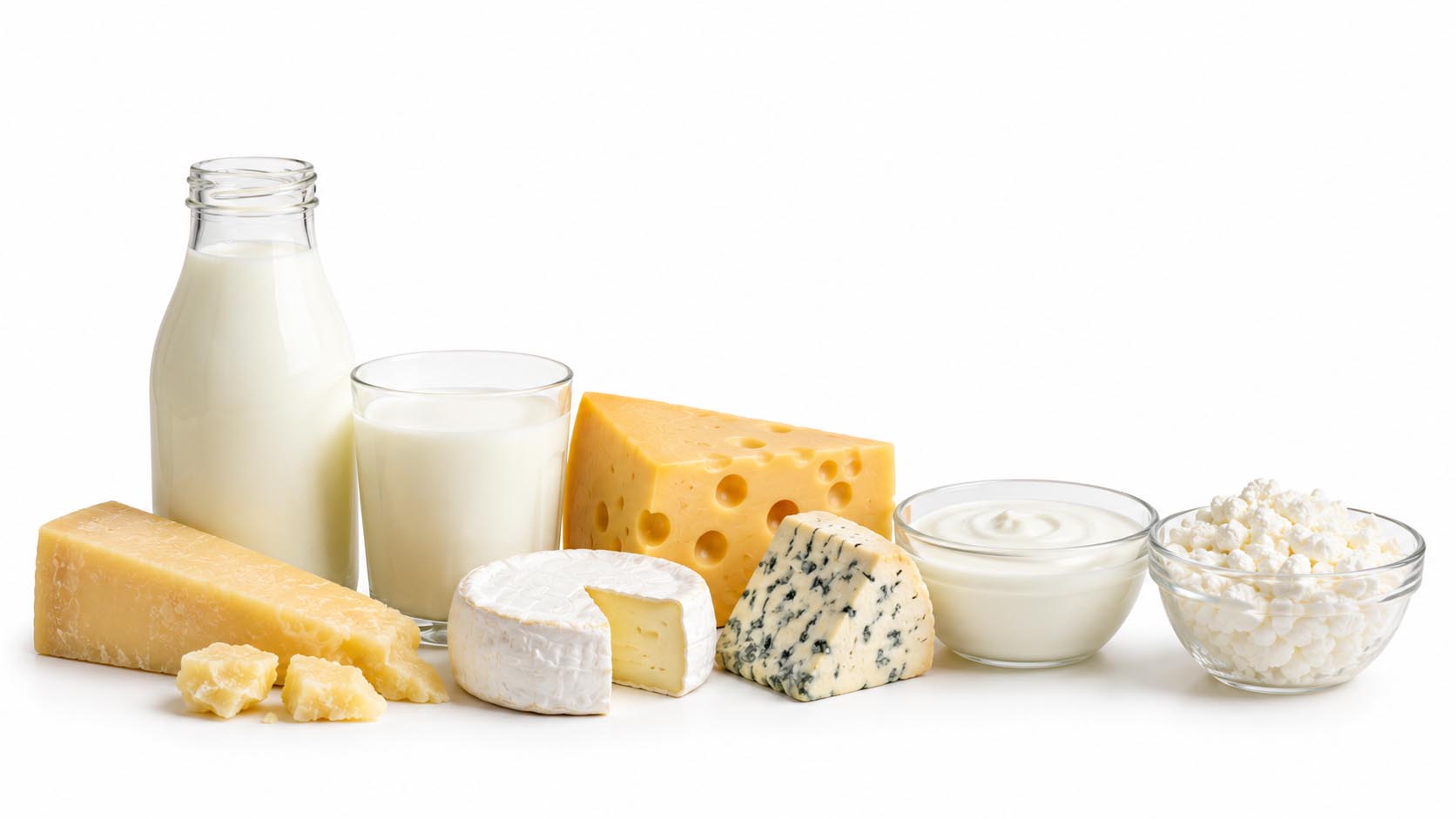
Dairy is the most concentrated everyday source of calcium in the typical UK diet. A glass of milk, a pot of yogurt or a matchbox-sized piece of hard cheese each provides around 200 to 250 mg of calcium, alongside complete protein, vitamin B12 and (in fortified products) vitamin D. The category covers a very wide fat range, from skimmed milk at 0.3 g per 100 g through standard yogurts at 3 to 5 g, all the way up to mature hard cheeses that can exceed 30 g per 100 g.
Different dairy products serve different roles. Liquid milks (whole, semi-skimmed, skimmed) are the everyday calcium delivery. Yogurt and kefir add live bacterial cultures that contribute to the gut microbiome, with Greek-style varieties offering double the protein of standard yogurt thanks to the straining process. Cheeses concentrate both nutrition and salt, and the variety on the UK shelf reflects centuries of regional tradition: Cheddar, Stilton, Lancashire, Wensleydale, Caerphilly and Red Leicester each have a protected geographical character. Butter and cream sit at the calorie-rich end of the category and behave more like fats than like protein foods in cooking.
People who avoid lactose for medical reasons can usually tolerate hard cheeses (where most of the lactose has been broken down during ageing) and Greek yogurt better than fresh milk. Lactose-free milks process the same dairy with added lactase enzyme and retain the full nutritional profile. Plant-based alternatives (soy, oat, almond, coconut) sit outside this category because they are not nutritionally equivalent: soy gets closest on protein, oat is fortified for calcium and B vitamins but lower in protein, and almond carries very little of either.
UK supermarkets stock British, European and a handful of imported cheeses; the Specialist Cheesemakers Association maintains a register of UK producers worth seeking out. Pasteurisation is mandatory on most retail dairy, with raw-milk cheeses available from selected shops under specific labelling rules. Storage is straightforward: most dairy keeps for the printed best-before date when stored in the main body of the fridge rather than the door.
The entries below cover individual milks, cheeses, yogurts, butters and creams. Each page lists per 100 g calories, protein, fat, saturated fat and salt, with portion sizes where the source data records them.
ButtermilkButtermilk provides 56 kcal and 4.1 g of protein per 100 g — a tangy cultured milk essential in baking. Full nutrition facts, history, and a complete guide.
Cottage CheeseCottage cheese provides 74 kcal and 12.4 g of protein per 100 g — a high-protein, low-fat fresh cheese. Full nutrition facts, health benefits, and cooking guide.
Parmesan (Parmigiano-Reggiano)Parmesan provides 451 kcal and 41.6 g of protein per 100 g — the world's highest-protein common cheese. Full nutrition facts, history, and a complete guide.
Imitation Milk (Plant-Based)Imitation milk provides 46 kcal and 1.6 g of protein per 100 g. Nutrition facts and a guide to plant-based and imitation milk alternatives.
MozzarellaMozzarella provides 280 kcal and 27.5 g of protein per 100 g — Italy's most famous fresh cheese. Full nutrition facts, history, and a complete cooking guide.
Monterey JackMonterey Jack provides 313 kcal and 28.2 g of protein per 100 g — a mild, buttery American melting cheese. Full nutrition facts, history, and cooking guide.
Processed CheeseProcessed cheese provides 376 kcal and 22.2 g of protein per 100 g. Nutrition facts and a guide to pasteurised processed cheese, including how it is made.
Swiss Cheese (Emmental)Swiss cheese (Emmental) provides 374 kcal and 28.4 g of protein per 100 g — the iconic holey Swiss cheese. Full nutrition facts, history, and cooking guide.
Muenster (Münster)Muenster provides 271 kcal and 24.7 g of protein per 100 g — a mild, supple semi-soft cheese. Full nutrition facts, history, and cooking guide.
Cream CheeseCream cheese provides 208 kcal and 7.9 g of protein per 100 g — a soft, spreadable fresh cheese. Full nutrition facts, history, and a complete cooking guide.
Skimmed MilkSkimmed milk provides 35 kcal and 3.4 g of protein per 100 g — the leanest form of dairy milk. Full nutrition facts, health benefits, and complete guide.
Fruit Variety YogurtFruit variety yogurt provides 95 kcal and 4.4 g of protein per 100 g. Nutrition facts and a guide to multi-fruit yogurt products and choosing quality options.
American CheddarAmerican cheddar provides 239 kcal and 16.7 g of protein per 100 g. Nutrition facts and a guide to this mild, processed American cheese.
FontinaFontina provides 389 kcal and 25.6 g of protein per 100 g — an Italian semi-hard cheese excellent for melting. Full nutrition facts, history, and cooking guide.
Port SalutPort Salut provides 352 kcal and 23.8 g of protein per 100 g — a mild, creamy French semi-soft cheese. Full nutrition facts, history, and cooking guide.
ProvoloneProvolone provides 351 kcal and 25.6 g of protein per 100 g — a stretched-curd Italian cheese. Full nutrition facts, history, and a complete cooking guide.
RicottaRicotta provides 150 kcal and 7.5 g of protein per 100 g — a light, versatile Italian fresh cheese made from whey. Full nutrition facts and complete cooking guide.
TilsitTilsit provides 340 kcal and 24.4 g of protein per 100 g — a mild, semi-hard cheese of Prussian origin. Full nutrition facts, history, and cooking guide.
Double Cream (Heavy Cream)Double cream provides 195 kcal and 19.1 g of fat per 100 g — a rich, thick cream for cooking and whipping. Full nutrition facts, and a complete cooking guide.
Whipped CreamWhipped cream provides 257 kcal and 22.2 g of fat per 100 g. Full nutrition facts and a complete guide to making and using whipped cream.
Filled Milk (Vegetable Fat Blend)Filled milk provides 63 kcal and 3.3 g of protein per 100 g — milk with dairy fat replaced by vegetable fat. Full nutrition facts and information.
American Cheese (Fat-Free)Fat-free American cheese provides 126 kcal and 21 g of protein per 100 g. Nutrition facts and a guide to processed American cheese in all its forms.
Greek YogurtGreek yogurt provides 93 kcal and 7.2 g of protein per 100 g — strained, thick, and higher protein than standard yogurt. Full nutrition facts and health guide.
Imitation Sour CreamImitation sour cream provides 208 kcal and 2.4 g of protein per 100 g — a non-dairy sour cream substitute. Full nutrition facts, ingredients, and guide.
Reduced-Fat Milk (2%)Reduced-fat milk (2%) provides 51 kcal and 3.5 g of protein per 100 g. Full nutrition facts, health benefits, and how it compares to whole and skimmed milk.
Semi-Skimmed Milk (1%)Semi-skimmed milk (1% fat) provides 42 kcal and 3.4 g of protein per 100 g. Full nutrition facts, health benefits, and a guide to low-fat dairy milk.
Low-Sodium MilkLow-sodium milk provides 61 kcal and 3.1 g of protein per 100 g. Nutrition facts and a guide to reduced-sodium milk for those managing blood pressure.
Dried Milk (Milk Powder)Dried milk (milk powder) provides 496 kcal and 26.3 g of protein per 100 g. Full nutrition facts, history, and a complete guide to using milk powder.
Skimmed Condensed MilkSkimmed condensed milk provides 78 kcal and 7.6 g of protein per 100 g. Nutrition facts and a guide to condensed and evaporated milk products.
Chocolate MilkChocolate milk provides 83 kcal and 3.2 g of protein per 100 g. Full nutrition facts, health context, and a guide to chocolate milk as a recovery drink.
Sheep's MilkSheep's milk provides 108 kcal and 6 g of protein per 100 g — the richest and most nutritious of all common milks. Full nutrition facts, history, and guide.
Acid WheyAcid whey provides 24 kcal and 0.76 g of protein per 100 g. A nutritional reference entry on the composition and uses of acid whey from cheese and yogurt production.
Plain YogurtPlain yogurt provides 63 kcal and 5.3 g of protein per 100 g and is rich in probiotics. Full nutrition facts, health benefits, and a complete guide to yogurt.
Vanilla YogurtVanilla yogurt provides 85 kcal and 4.9 g of protein per 100 g. Full nutrition facts, how to choose a quality vanilla yogurt, and health information.
Fruit YogurtFruit yogurt provides 99 kcal and 4 g of protein per 100 g. Full nutrition facts, how to choose a quality fruit yogurt, and health information.
Mexican Cheese (Queso)Mexican cheese provides 366 kcal and 20 g of protein per 100 g. Nutrition facts and a guide to the family of traditional Mexican cheeses including queso.
CheddarCheddar provides 410 kcal and 24.3 g of protein per 100 g — Britain's most loved cheese. Full nutrition facts, history, and a complete guide to cheddar.
Kefir (Low-Fat)Low-fat kefir provides 43 kcal and 3.8 g of protein per 100 g and is rich in probiotics. Full nutrition facts, history, and health benefits of kefir.
Frozen YogurtFrozen yogurt provides 139 kcal and 8 g of protein per 100 g. Full nutrition facts, how frozen yogurt compares to ice cream, and a complete health guide.
Gjetost (Norwegian Brown Cheese)Gjetost provides 466 kcal and 9.7 g of protein per 100 g — a uniquely sweet, caramelised Norwegian whey cheese. Full nutrition facts, history, and guide.
GoudaGouda provides 356 kcal and 24.9 g of protein per 100 g — the world's most widely exported cheese. Full nutrition facts, history, and cooking guide.
GruyèreGruyère provides 413 kcal and 29.8 g of protein per 100 g — one of the finest Swiss cheeses, essential for fondue. Full nutrition facts and cooking guide.
LimburgerLimburger provides 327 kcal and 20.1 g of protein per 100 g — an infamously pungent washed-rind cheese. Full nutrition facts, history, and guide.
NeufchâtelNeufchâtel provides 253 kcal and 9.2 g of protein per 100 g — a soft, creamy French cheese similar to cream cheese. Full nutrition facts and cooking guide.
Romano (Pecorino Romano)Romano (Pecorino Romano) provides 387 kcal and 31.8 g of protein per 100 g — a hard, salty Italian sheep's milk cheese. Full nutrition facts and cooking guide.
RoquefortRoquefort provides 369 kcal and 21.5 g of protein per 100 g — the king of French blue cheeses, made from sheep's milk. Full nutrition facts and cooking guide.
Sour CreamSour cream provides 135 kcal and 12 g of fat per 100 g — a tangy cultured cream essential in many cuisines. Full nutrition facts, history, and cooking guide.
Whole MilkWhole milk provides 61 kcal and 3.2 g of protein per 100 g. Full nutrition facts, health benefits, and a complete guide to whole milk and its many uses.
Raw Whole Milk (Producer Milk)Raw whole milk (producer milk) provides 64 kcal and 3.3 g of protein per 100 g. Nutrition facts and a balanced guide to raw milk, its uses, and considerations.
Skimmed Milk (Non-Fat)Non-fat skimmed milk provides 34 kcal and 3.4 g of protein per 100 g — highest protein-to-calorie ratio of any milk. Full nutrition facts and health guide.
Chocolate Milk DrinkChocolate milk drink provides 77 kcal and 3.5 g of protein per 100 g. Nutrition facts and a guide to commercial chocolate milk beverages.
Goat's MilkGoat's milk provides 69 kcal and 3.6 g of protein per 100 g — a nutritious alternative to cow's milk. Full nutrition facts, history, and health benefits.
Human Breast MilkHuman breast milk provides 70 kcal and 1 g of protein per 100 g. A nutritional reference entry on the composition and importance of human breast milk.
Buffalo MilkBuffalo milk provides 97 kcal and 3.8 g of protein per 100 g — richer and fattier than cow's milk. Full nutrition facts, history, and uses of buffalo milk.
Sweet WheySweet whey provides 27 kcal and 0.85 g of protein per 100 g. A nutritional reference entry on sweet whey from rennet-coagulated cheese production.
Mexican Cheese BlendMexican cheese blend provides 384 kcal and 23.5 g of protein per 100 g — a mix of cheeses suited to Mexican cooking. Full nutrition facts and cooking guide.
Evaporated MilkEvaporated milk provides 107 kcal and 6.7 g of protein per 100 g — concentrated, shelf-stable milk. Full nutrition facts, history, and a complete cooking guide.
Half and Half (Single Cream)Half and half provides 72 kcal and 5 g of fat per 100 g — a lighter cream for coffee and cooking. Full nutrition facts, uses, and a complete guide.
Blue CheeseBlue cheese provides 353 kcal and 21.4 g of protein per 100 g. Nutrition facts, history, and cooking guide for Stilton, Gorgonzola, and all blue cheeses.
Brick CheeseBrick cheese provides 371 kcal and 23.2 g of protein per 100 g — an American semi-soft cheese. Full nutrition facts, history, and cooking guide.
BrieBrie provides 334 kcal and 20.8 g of protein per 100 g — a rich, creamy French soft cheese. Full nutrition facts, history, and a complete guide to serving Brie.
CamembertCamembert provides 300 kcal and 19.8 g of protein per 100 g — a classic Normandy soft cheese. Full nutrition facts, history, and a complete cooking guide.
Goat's Cheese (Chèvre)Goat's cheese provides 452 kcal and 30.5 g of protein per 100 g. Full nutrition facts, history, and a complete guide to chèvre and all styles of goat's cheese.
Chocolate YogurtChocolate yogurt provides 112 kcal and 3.5 g of protein per 100 g. Full nutrition facts, health considerations, and a guide to chocolate-flavoured yogurt.
Vanilla or Lemon Yogurt (Low-Fat)Vanilla or lemon low-fat yogurt provides 43 kcal and 3.9 g of protein per 100 g — one of the leanest yogurt options. Full nutrition facts and health guide.
Dry White Cheese (Queso Blanco)Dry white cheese provides 325 kcal and 24.5 g of protein per 100 g. Nutrition facts and a guide to queso blanco and similar fresh white cheeses.
Fresh Cheese (Queso Fresco)Fresh cheese provides 299 kcal and 18.1 g of protein per 100 g. Nutrition facts and a guide to queso fresco and other fresh unaged cheeses.
White Cheese (Queso Blanco)White cheese provides 310 kcal and 20.4 g of protein per 100 g. Nutrition facts and a guide to queso blanco and other white fresh cheeses across culinary traditions.
Caraway CheeseCaraway cheese provides 376 kcal and 25.2 g of protein per 100 g. Nutrition facts and a guide to this traditional Scandinavian and Central European cheese.
Cheddar (USDA Reference)USDA reference cheddar provides 403 kcal and 22.9 g of protein per 100 g. Nutritional reference data for cheddar used in US food distribution programmes.
Cheshire CheeseCheshire cheese provides 387 kcal and 23.4 g of protein per 100 g — one of Britain's oldest cheeses. Full nutrition facts, history, and a complete guide.
ColbyColby provides 394 kcal and 23.8 g of protein per 100 g — an American semi-hard cheese milder than cheddar. Full nutrition facts, history, and cooking guide.
EdamEdam provides 357 kcal and 25 g of protein per 100 g — the iconic Dutch red-waxed cheese. Full nutrition facts, history, and a complete guide to Edam.
FetaFeta provides 265 kcal and 14.2 g of protein per 100 g — a tangy Greek brined cheese with protected designation of origin. Full nutrition facts and cooking guide.
Low-Fat CheeseLow-fat cheese provides 173 kcal and 24.4 g of protein per 100 g — high protein at reduced fat. Full nutrition facts and a guide to low-fat cheese options.
Low-Sodium CheeseLow-sodium cheese provides 398 kcal and 24.4 g of protein per 100 g. Nutrition facts and a guide to reduced-salt cheese options for those managing sodium intake.
Reduced-Fat Sour CreamReduced-fat sour cream provides 181 kcal and 7 g of protein per 100 g. Nutrition facts and a guide to lower-fat cultured cream options.
Light Sour CreamLight sour cream provides 136 kcal and 3.5 g of protein per 100 g — a lower-fat sour cream with similar tang. Full nutrition facts and cooking guide.
Fat-Free Sour CreamFat-free sour cream provides 74 kcal and 3.1 g of protein per 100 g. Nutrition facts and a guide to fat-free and low-calorie sour cream alternatives.
Vanilla-Flavoured YogurtVanilla-flavoured yogurt provides 86 kcal and 4.9 g of protein per 100 g. Nutrition facts and a guide to vanilla-flavoured yogurt and ingredient label reading.
Read this page online at www.nourishmentforlife.org/dairy