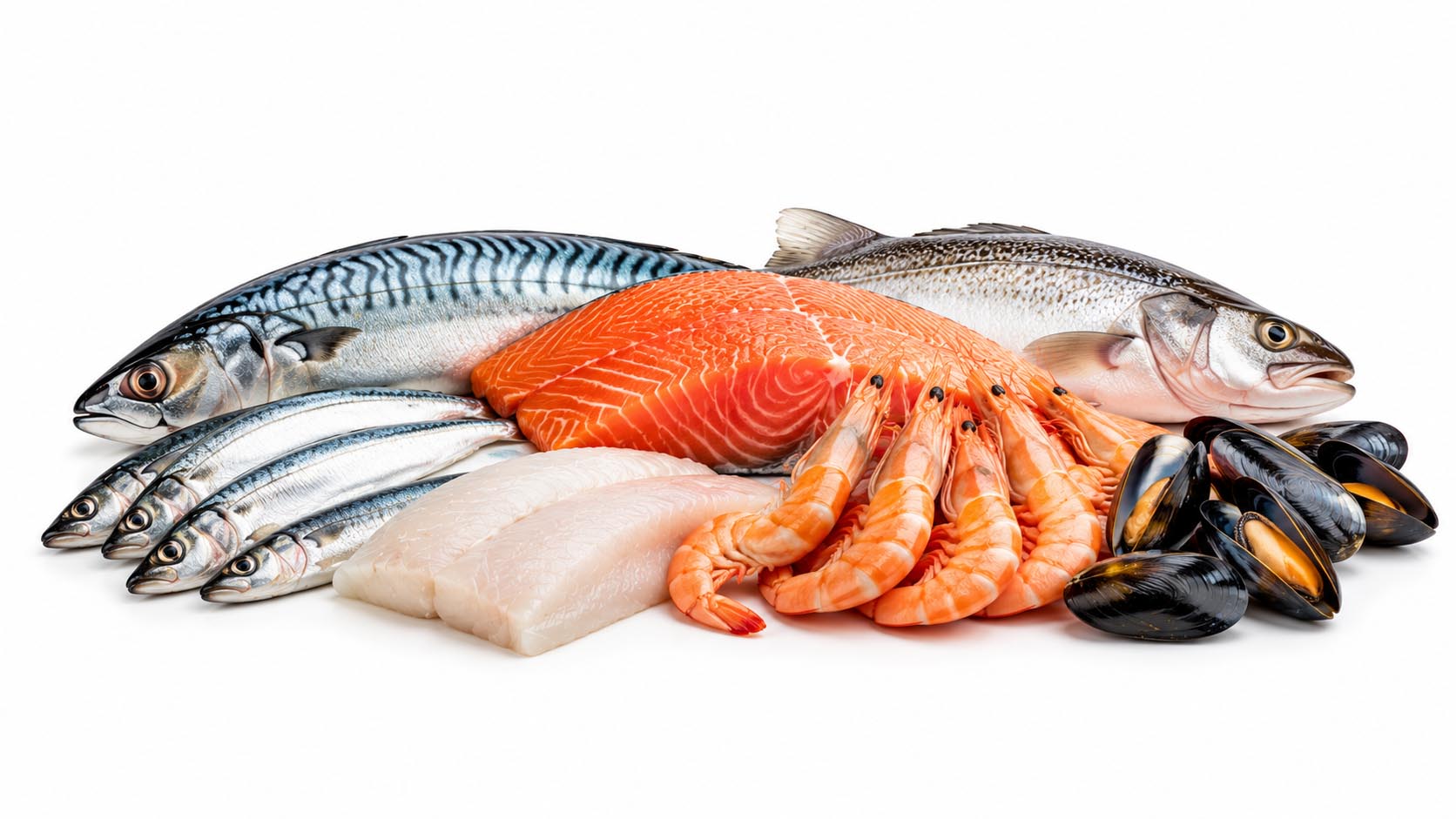
Fish and Seafood: Nutrition and UK Shopping Reference
Fish and seafood span a broader nutritional range than any other protein category in everyday UK shopping. The group splits naturally into three: oily fish such as salmon, mackerel, sardines, herring and trout; white fish such as cod, haddock, plaice, pollock and sea bass; and shellfish, which includes everything from prawns and mussels to scallops, crab and lobster.
The headline nutritional difference between these groups is fat content and the kind of fat involved. Oily fish are among the few practical dietary sources of long-chain omega 3 fatty acids EPA and DHA, which the body uses for cardiovascular and neurological function and which plant sources cannot supply directly. White fish carry very little fat (typically under 2 g per 100 g) and are dominated by lean protein. Shellfish concentrate minerals such as zinc, iodine, selenium and copper at levels rarely matched by other foods, although they vary widely in fat content.
UK NHS guidance recommends eating at least two portions of fish a week, of which one portion (around 140 g cooked) should be oily. Tinned and frozen fish count toward the target, and tinned sardines, mackerel and salmon are some of the most cost-effective ways to hit the oily-fish recommendation. Restrictions apply to high-mercury species (shark, swordfish, marlin) for pregnant women, women planning a pregnancy and children, who should also limit tuna intake.
Sourcing is worth a thought. The Marine Conservation Society publishes a regularly updated Good Fish Guide that flags species and fishing methods that are sustainable versus those under pressure. UK-caught hake, pollock, mackerel and herring tend to score well; some imported tuna and prawn farming carries higher environmental cost. Frozen-at-sea fish often has better quality than the wet counter equivalent because it stops the deterioration clock immediately.
Storage is unforgiving. Fresh fish keeps for a day or two in a domestic fridge at the back where it is coldest, ideally on ice. Smoked fish lasts longer (a week or so unopened) but salt content rises substantially. Shellfish should be alive when bought live and used the same day. The entries below cover species commonly available in UK supermarkets and fishmongers, with per 100 g calories, protein, fat and key minerals where reported.
HalibutHalibut provides 116 kcal and 20.5 g of protein per 100 g — a large, lean flatfish with a firm, sweet flavour. Full nutrition facts, health benefits, and cooking guide.
SalmonSalmon provides 140 kcal and 22.6 g of protein per 100 g and is one of the richest sources of omega-3 fatty acids. Full nutrition facts, health benefits, and cooking guide.
Sheefish (Inconnu)Sheefish (inconnu) provides 115 kcal and 22.3 g of protein per 100 g — a prized Arctic freshwater fish. Full nutrition facts, history, and cooking guide.
WhitefishWhitefish provides 131 kcal and 18.9 g of protein per 100 g — a versatile, mildly flavoured freshwater fish. Full nutrition facts, history, and cooking guide.
LingcodLingcod provides 79 kcal and 17.9 g of protein per 100 g — a very lean Pacific fish with distinctively blue-green flesh. Full nutrition facts and cooking guide.
BassBass provides 97 kcal and 17.7 g of protein per 100 g — a lean, mild freshwater and saltwater fish. Full nutrition facts, health benefits, and cooking guide.
BluefishBluefish provides 124 kcal and 20 g of protein per 100 g and is a good source of omega-3 fatty acids. Full nutrition facts, health benefits, and cooking guide.
BurbotBurbot provides 90 kcal and 19.3 g of protein per 100 g — a very lean freshwater fish related to cod. Full nutrition facts, health benefits, and cooking guide.
ButterfishButterfish provides 146 kcal and 17.3 g of protein per 100 g with a rich, buttery flavour from its high fat content. Full nutrition facts and cooking guide.
CarpCarp provides 127 kcal and 17.8 g of protein per 100 g. The world's most widely farmed fish — full nutrition facts, history, and cooking guide.
Cisco (Lake Herring)Cisco (lake herring) provides 98 kcal and 19 g of protein per 100 g — a lean freshwater fish. Full nutrition facts, health benefits, and cooking guide.
CodCod provides 82 kcal and 17.8 g of protein per 100 g — one of the leanest and most important food fish in the world. Full nutrition facts and cooking guide.
CuskCusk provides 87 kcal and 19 g of protein per 100 g — a very lean deep-water fish related to cod. Full nutrition facts, health benefits, and cooking guide.
Mahi-Mahi (Dolphinfish)Mahi-mahi provides 85 kcal and 18.5 g of protein per 100 g — a lean, firm-textured tropical fish. Full nutrition facts, health benefits, and cooking guide.
Drum (Red Drum)Drum (red drum) provides 119 kcal and 17.5 g of protein per 100 g. Full nutrition facts and a complete cooking guide for this popular American sport fish.
GrouperGrouper provides 92 kcal and 19.4 g of protein per 100 g — a lean, firm-textured fish from tropical waters. Full nutrition facts, health benefits, and cooking guide.
HaddockHaddock provides 74 kcal and 16.3 g of protein per 100 g — very lean and a firm favourite in British fish and chips. Full nutrition facts and cooking guide.
CrabCrab provides 86 kcal and 17.4 g of protein per 100 g — very lean and rich in zinc and selenium. Full nutrition facts, health benefits, and cooking guide.
OysterOysters provide 51 kcal and 5.7 g of protein per 100 g and are one of the most mineral-dense foods available — extraordinarily rich in zinc. Full nutrition facts.
Emu (Oyster Cut)Emu oyster cut provides 141 kcal and 22.8 g of protein per 100 g — lean, red emu meat from Australia. Full nutrition facts, history, and cooking guide.
HerringHerring provides 195 kcal and 16.4 g of protein per 100 g and is one of the richest sources of omega-3 fatty acids available. Full nutrition facts and cooking guide.
LingLing provides 87 kcal and 19 g of protein per 100 g — a lean, cod-like fish popular in Scandinavian and southern European cooking. Full nutrition facts and cooking guide.
MackerelMackerel provides 158 kcal and 20.1 g of protein per 100 g and is one of the best dietary sources of omega-3 fatty acids. Full nutrition facts and health benefits.
Milkfish (Bangus)Milkfish (bangus) provides 148 kcal and 20.5 g of protein per 100 g. The national fish of the Philippines — full nutrition facts, history, and cooking guide.
MonkfishMonkfish provides 76 kcal and 14.5 g of protein per 100 g — a very lean fish with dense, lobster-like flesh. Full nutrition facts, history, and cooking guide.
Ocean PoutOcean pout provides 79 kcal and 16.6 g of protein per 100 g — a lean, mild fish from North Atlantic waters. Full nutrition facts, health benefits, and cooking guide.
PerchPerch provides 91 kcal and 19.4 g of protein per 100 g — a lean, sweet-fleshed freshwater fish popular across Europe. Full nutrition facts and cooking guide.
PikePike provides 88 kcal and 19.3 g of protein per 100 g — a very lean, bony freshwater fish prized in European cooking. Full nutrition facts and cooking guide.
PompanoPompano provides 164 kcal and 18.5 g of protein per 100 g — a rich, flavourful fish considered a delicacy in the American South. Full nutrition facts and cooking guide.
RockfishRockfish provides 90 kcal and 18.4 g of protein per 100 g — a group of lean, firm Pacific fish popular in Western American cooking. Full nutrition facts and cooking guide.
Sea Trout (Weakfish)Sea trout provides 104 kcal and 16.7 g of protein per 100 g — a delicate, flavourful fish from both coastal and freshwater environments. Full nutrition facts.
ShadShad provides 197 kcal and 16.9 g of protein per 100 g — a bony but richly flavoured oily fish with deep roots in American culinary history. Full nutrition facts.
SharkShark provides 130 kcal and 21 g of protein per 100 g — a firm, lean meat eaten in many cultures. Full nutrition facts, sustainability considerations, and cooking guide.
Red SnapperRed snapper provides 100 kcal and 20.5 g of protein per 100 g — a lean, sweet-flavoured fish from tropical waters. Full nutrition facts, health benefits, and cooking guide.
Spot (Atlantic Spot)Spot provides 123 kcal and 18.5 g of protein per 100 g — a small, flavourful coastal fish popular in the American South. Full nutrition facts and cooking guide.
SturgeonSturgeon provides 105 kcal and 16.1 g of protein per 100 g — an ancient fish famed for its caviar. Full nutrition facts, history, and cooking guide.
SwordfishSwordfish provides 144 kcal and 19.7 g of protein per 100 g — a firm, meaty fish that grills like a steak. Full nutrition facts, health benefits, and cooking guide.
TilefishTilefish provides 96 kcal and 17.5 g of protein per 100 g — a lean, sweet-flavoured deep-sea fish. Full nutrition facts, health benefits, and cooking guide.
TunaTuna provides 144 kcal and 23.3 g of protein per 100 g — one of the most protein-dense fish available. Full nutrition facts, health benefits, and cooking guide.
TurbotTurbot provides 95 kcal and 16.1 g of protein per 100 g — one of the most prized flatfish in European fine dining. Full nutrition facts and cooking guide.
WhitingWhiting provides 90 kcal and 18.3 g of protein per 100 g — a very lean, mild white fish popular in Britain and Europe. Full nutrition facts and cooking guide.
TroutTrout provides 141 kcal and 19.9 g of protein per 100 g and is rich in omega-3 fatty acids. Full nutrition facts, health benefits, and a complete cooking guide.
PollockPollock provides 76 kcal and 17.2 g of protein per 100 g — a very lean white fish and the basis of most fish fingers and processed fish products. Full nutrition facts.
AnchovyAnchovies provide 131 kcal and 20.4 g of protein per 100 g and are rich in omega-3 fatty acids. Full nutrition facts, health benefits, and cooking guide.
CatfishCatfish provides 95 kcal and 16.4 g of protein per 100 g — a mild, lean freshwater fish. Full nutrition facts, health benefits, and cooking guide.
CroakerCroaker provides 104 kcal and 17.8 g of protein per 100 g — a mild coastal fish popular in American and Asian cooking. Full nutrition facts and cooking guide.
EelEel provides 184 kcal and 18.4 g of protein per 100 g — rich in fat and exceptionally high in vitamin A. Full nutrition facts, history, and cooking guide.
Flatfish (Flounder and Sole)Flatfish (flounder and sole) provides 70 kcal and 12.4 g of protein per 100 g — among the leanest fish available. Full nutrition facts, history, and cooking guide.
LobsterLobster provides 77 kcal and 16.5 g of protein per 100 g — extremely lean and a luxury protein. Full nutrition facts, history, and a complete cooking guide.
Prawns (Shrimp)Prawns (shrimp) provide 71 kcal and 13.6 g of protein per 100 g — among the leanest seafood available. Full nutrition facts, health benefits, and cooking guide.
Spiny Lobster (Rock Lobster)Spiny lobster provides 112 kcal and 20.6 g of protein per 100 g — a lean, flavourful crustacean. Full nutrition facts, health benefits, and cooking guide.
ClamClams provide 86 kcal and 14.7 g of protein per 100 g and are the richest common food source of vitamin B12. Full nutrition facts, health benefits, and cooking guide.
MusselMussels provide 86 kcal and 11.9 g of protein per 100 g and are rich in omega-3, B12, iron, and zinc. Full nutrition facts, health benefits, and cooking guide.
OctopusOctopus provides 82 kcal and 14.9 g of protein per 100 g — very lean and rich in minerals. Full nutrition facts, history, and a complete cooking guide.
ScallopScallops provide 69 kcal and 12.1 g of protein per 100 g — very lean, delicate, and rich in B12 and magnesium. Full nutrition facts, health benefits, and cooking guide.
Squid (Calamari)Squid (calamari) provides 92 kcal and 15.6 g of protein per 100 g — lean, versatile, and rich in minerals. Full nutrition facts, health benefits, and cooking guide.
Ostrich (Oyster Cut)Ostrich oyster cut provides 125 kcal and 21.6 g of protein per 100 g — a very lean red meat. Full nutrition facts, history, and cooking guide.
MulletMullet provides 117 kcal and 19.4 g of protein per 100 g — a firm, flavourful fish eaten worldwide. Full nutrition facts, health benefits, and cooking guide.
Ocean Perch (Redfish)Ocean perch provides 79 kcal and 15.3 g of protein per 100 g — a lean, mild deep-sea fish. Full nutrition facts, health benefits, and cooking guide.
Fish Roe (Caviar)Fish roe provides 143 kcal and 22.3 g of protein per 100 g and is extraordinarily rich in omega-3 fatty acids and vitamins. Full nutrition facts and a guide to caviar.
Orange RoughyOrange roughy provides 76 kcal and 16.4 g of protein per 100 g — a very lean deep-sea fish with sustainability concerns. Full nutrition facts and information.
Sablefish (Black Cod)Sablefish (black cod) provides 195 kcal and 13.4 g of protein per 100 g and has one of the highest omega-3 contents of any fish. Full nutrition facts and cooking guide.
Scup (Porgy)Scup (porgy) provides 105 kcal and 18.9 g of protein per 100 g — a lean, flavourful coastal fish. Full nutrition facts, health benefits, and cooking guide.
Sea BassSea bass provides 97 kcal and 18.4 g of protein per 100 g — a prized, elegant fish. Full nutrition facts, health benefits, and cooking guide for sea bass.
SheepsheadSheepshead provides 108 kcal and 20.2 g of protein per 100 g — a firm, sweet-flavoured coastal fish. Full nutrition facts, health benefits, and cooking guide.
SmeltSmelt provides 97 kcal and 17.6 g of protein per 100 g — a small, oily fish often eaten whole. Full nutrition facts, history, and cooking guide.
Sucker (Freshwater Fish)Sucker fish provides 92 kcal and 16.8 g of protein per 100 g — a lean freshwater fish eaten across North America. Full nutrition facts and cooking guide.
Sunfish (Ocean Sunfish)Sunfish provides 89 kcal and 19.4 g of protein per 100 g — a very lean, mild freshwater and ocean fish. Full nutrition facts, history, and cooking guide.
WolffishWolffish provides 96 kcal and 17.5 g of protein per 100 g — a firm, sweet-flavoured Atlantic fish. Full nutrition facts, history, and cooking guide.
YellowtailYellowtail provides 146 kcal and 23.1 g of protein per 100 g — a rich, flavourful fish beloved in Japanese cuisine. Full nutrition facts, health benefits, and cooking guide.
TilapiaTilapia provides 96 kcal and 20.1 g of protein per 100 g — a lean, mild freshwater fish and one of the most widely farmed fish in the world. Full nutrition facts.
Sardines (Canned, Whole)Canned sardines, including the soft edible bones. A strong UK source of vitamin D, vitamin B12, calcium (from the bones) and selenium.
Read this page online at www.nourishmentforlife.org/fish-seafood