
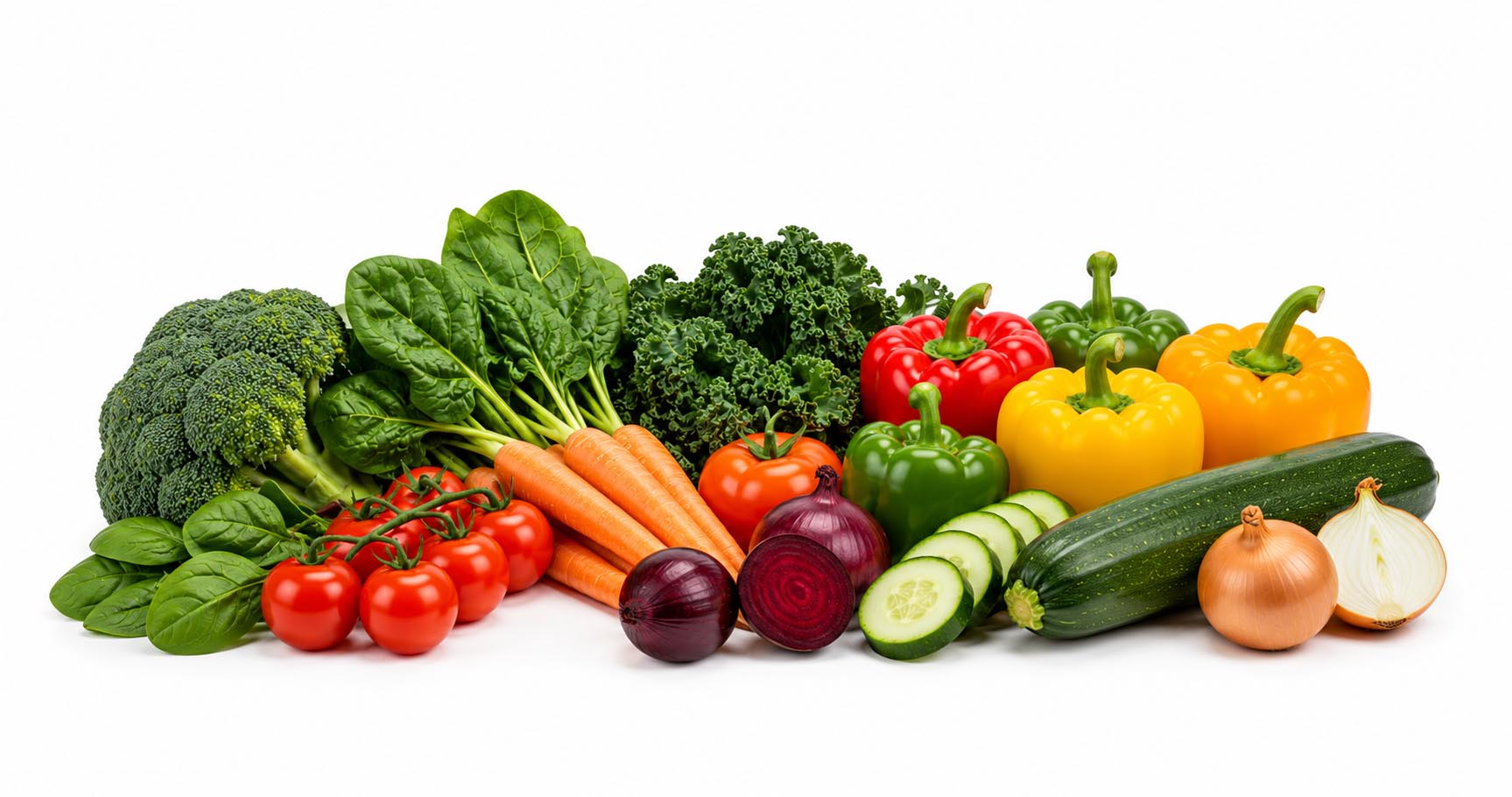
How Can Vegetables Improve Our Lifestyles? - Benefits, Health and Nutrition The benefits of vegetables are outstanding as this food group can provide our bodies with vital vitamins and nutrients including protein, iron, potassium and zinc. These are fundamental nutrients that can significantly improve and help benefit our overall health and well-being. Research into the benefits, vitamins and nutrients of vegetables shows that eating just five portions of nutritious fruit and vegetables per day can benefit our lifestyles by reducing the risk of many major life threatening diseases including different types of cancers and heart disease.
There are lots of health benefits from eating vegetables - the list of nutritional benefits is endless and this website aims to educate and teach people about the importance of eating vegetables and how a diet rich in nutrients and vitamins from vegetables can provide many health benefits and positively improve overall well-being and lifestyle.
Essential Vitamins and Nutrients - Benefits, Health and Nutrition of Vegetables Healthy vegetables are a dietary requirement which should form part of a healthy balanced diet as the nutritional benefits are limitless. There are many different varieties across the world available in our supermarkets - many of which are inexpensive and very simple to cook. This website provides important nutritional data and information regarding the health benefits of vegetables and the positive effects this type of healthy, nutritional food can have on a person. There is information about of the variety of vegetables including the most common green leafy types, unusual types including purple, yellow and red veggies, exotic, oriental and root.
A-Z List of the Most Popular Vegetables - Health Benefits and Nutrition The definition of a vegetable is an edible plant or part of a plant which is used as part of a healthy balanced, nutritional diet which provides lots of health benefits in the form of vitamins, nutrients and minerals. This type of healthy food often accompanies meat or fish as part of a main meal. Vegetables can be defined as plants which are grown for food purposes. The part of the plant which is usually eaten is either the root, stem or leaf. There are exceptions to the edible plant rule.
Vegetable Definition - Health Benefits and Nutrition Vegetables can be defined as plants which are grown for food purposes. The part of the plant which is usually eaten is either the root, stem or leaf. There are exceptions to the edible plant rule. For example, mushrooms are considered by most as vegetables, however, they are not part of a plant. Therefore, the exact definition is sometimes a little unclear but in the main vegetables do come from plants.
Examples of some of the most commonly known vegetables which are grown from plants are: carrots, cabbage, beans, broccoli, and cauliflower. All types provide various nutritional benefits and vitamins. Most contain few calories and carbohydrates.
The History of the Vegetable - Benefits, Health and Nutrition Since the very early times of human existence, vegetables have formed an essential part of the human diet; whether it's been the root, stems, leaves or seeds that we've been eating, we have been doing so for a very long time all across the world! For example - vegetables such as onions, garlic, radishes, broad beans and lettuce was grown by the Egyptians. The Romans and the Greeks grew fennel and artichokes.
If you have ever wondered about the history of vegetables and where these edible plants, that are so beneficial to our health and nutrition, originated, then it may come as some surprise to your that it was actually many of our greatest explorers who first founded or introduced different varieties of vegetables from foreign lands to their native countries - bringing benefits, health and nutrition to their homelands!
Who Discovered Potatoes? Christopher Columbus was one of the explorers who discovered potatoes and other healthy vegetables such as peppers, tomatoes, maize and different varieties of squash. Marco Polo brought aromatic spices to Europe from his travels in China. It is believed that Sir Walter Raleigh discovered potatoes , although some people say it may have been Sir Francis Drake during his visit to Columbia, South America in 1586.
Growing Your Own Vegetables - Benefits, Health and Nutrition Gradually humans began trying and tasting these healthy, unusual, vibrant and colorful vegetables from exotic and oriental countries. All of which provide us with essential health benefits, vitamins and nutrients, and help to maintain and improve nutrition, health, well-being and lifestyle. All types of vegetables of very high standard and quality are readily available to us in this day and age.
Many people grow their own veg so that they can experience the most health benefits and nutritional benefits from the freshest and most healthiest produce at a low cost. It takes considerable time and care throughout the seasons to grown healthy, nutritional veggies. It is not an easy task but home-grown veggies taste lovely and contain the most vitamins and nutrients which is essential for good health.
Health experts and nutritionists believe that a well-balanced diet that includes at least five portions of fruit and vegetables per day will help to considerably improve our lifestyles and ultimately extend our lives
Vegetable Nutrition: Health Benefits and Nutritional Value
Vegetables are the part of the UK diet with the widest gap between advice and behaviour. The Eatwell Guide asks for at least five 80 g portions of fruit and vegetables a day; national survey data has consistently found most adults falling short and teenagers falling shortest. Nothing in this section is going to close that gap, but knowing what each vegetable actually offers makes the choice between them less arbitrary.
“Vegetable” is a kitchen category, not a botanical one, and the groups below behave very differently in a diet.
Starchy roots and tubers — Potato, Sweet Potato, Parsnips, Yam — are energy foods first. Potatoes specifically do not count towards five a day in UK guidance, because they are treated as a starchy staple alongside bread and rice.
Leafy greens — Spinach, Kale, Cabbage, Watercress — carry the most micronutrient per calorie, particularly folate, vitamin K and carotenoids.
Alliums — Onion, Garlic, Leek, Shallots — contribute organosulphur compounds and are the flavour base of most savoury cooking.
Brassicas — Broccoli, Cauliflower, Brussels Sprouts — supply glucosinolates, the compounds behind both their bitterness and most of the research interest in them.
Fruits used as vegetables — Tomato, Peppers, Aubergine, Cucumber — are botanically fruit and are treated as vegetables because they are not sweet.
Two points that cut against intuition. First, frozen is not a compromise: vegetables for freezing are picked at maturity and blanched within hours, while “fresh” produce can spend a week in transit losing vitamin C. Second, cooking is not simply destructive. Boiling leaches water-soluble vitamins, but heat also breaks down cell walls and makes carotenoids markedly more available — cooked tomatoes deliver more usable lycopene than raw ones.
Where to start
Every entry below gives per-100 g composition with UK reference intakes. See also our Vitamin C, Vitamin B9 (Folate / Folic acid) and Potassium pages for what these nutrients actually do.