
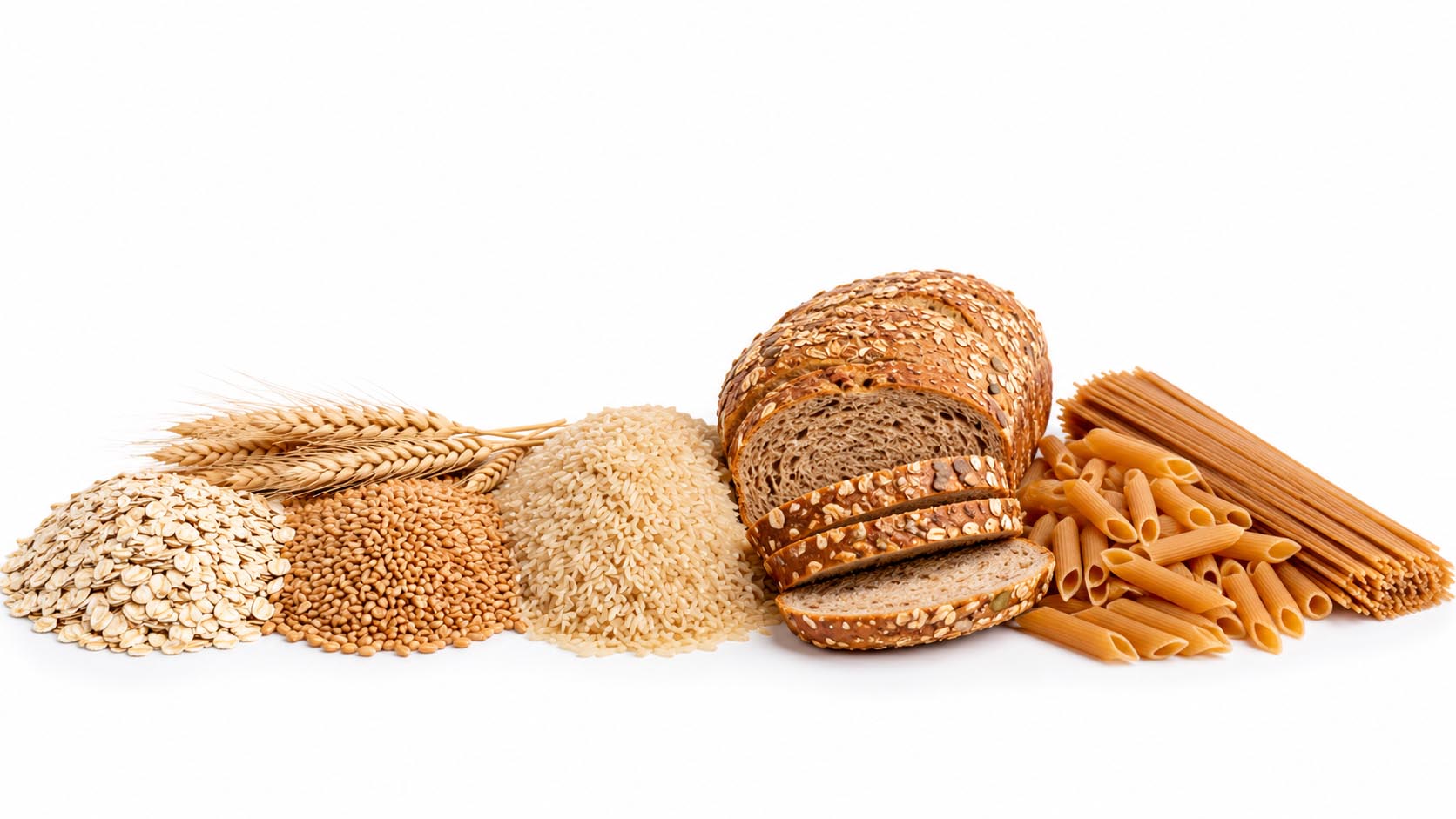
Grains are the staple energy source for most of the world's diets. They provide complex carbohydrates that release glucose into the bloodstream more slowly than refined sugars, B vitamins (particularly thiamine, niacin and folate), some plant protein and varying amounts of fibre. The defining nutritional question for any grain is whether it has been kept whole or refined: whole grains retain the bran and germ layers that carry most of the fibre, magnesium, zinc and B vitamins, while refined grains have been polished down to the starchy endosperm.
Wheat dominates the UK shelf in the form of bread, pasta, breakfast cereals, biscuits and baked goods, but a wider range of grains has become available over the past decade. Oats are the standout UK-grown grain, used for porridge, granola, bread and oat-based dairy alternatives. Rice (white, brown, basmati, wild) is a near-universal kitchen staple. Less common but increasingly stocked: barley, rye, buckwheat, quinoa, millet, spelt, freekeh and farro. Each behaves differently in cooking and brings a different mouthfeel and nutrition profile.
People with coeliac disease or non-coeliac gluten sensitivity need strictly gluten-free grains. Rice, oats labelled as gluten-free (oats are naturally gluten-free but cross-contaminate during milling), quinoa, buckwheat, millet, sorghum and corn all qualify. Wheat, rye, barley and triticale all contain gluten; spelt is a wheat variant and so contains it too.
UK Eatwell Guide advice is to base meals on starchy carbohydrates, choosing wholegrain or higher-fibre versions where possible. Wholemeal bread, brown rice, whole-grain pasta and oats with the bran intact provide more fibre than their refined counterparts and tend to leave you feeling fuller for longer. The "5 a day" target works alongside grain intake rather than competing with it.
Storage for dry grains is unfussy: a sealed container in a cool, dry cupboard keeps most varieties for six months to a year. Whole grains with the oily germ intact (oat groats, brown rice, wholemeal flour) can go rancid faster than refined alternatives because the germ contains polyunsaturated fats; buying smaller quantities and rotating through stock helps. The entries below cover individual grains in raw form, with per 100 g energy, carbohydrate, fibre and protein on each page.